How Invisalign Calabasas CA Makes Orthodontics More Convenient
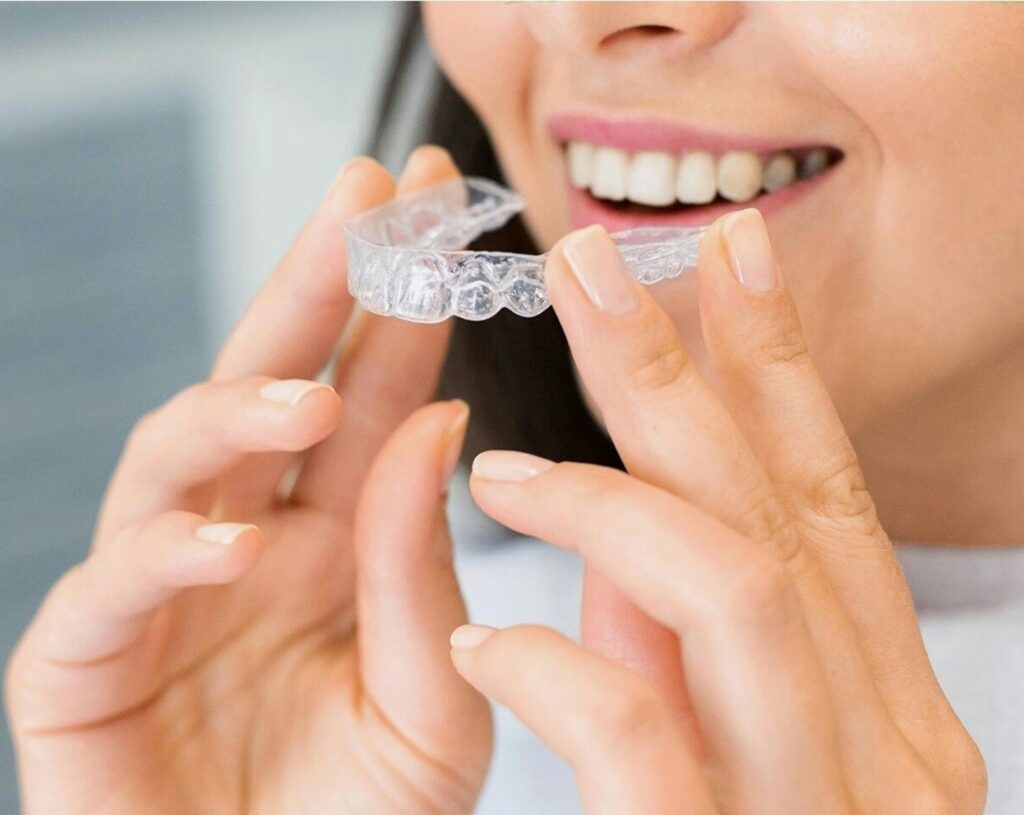
Orthodontic treatment used to carry a fairly predictable set of inconveniences. Frequent wire adjustments, food restrictions, visible brackets in photos, and the low-grade soreness that follows each tightening appointment were simply part of the deal. That is still true for some treatments, and traditional braces remain the right choice in certain cases. But for many adults and teens, Invisalign has changed the day-to-day experience of straightening teeth in a way that feels much more compatible with modern schedules.
That shift is especially noticeable in communities where people balance work, commuting, school commitments, social events, and family responsibilities all at once. Patients searching for Invisalign Calabasas CA are often not looking only for cosmetic improvement. They are looking for a treatment that fits into real life without taking it over.
Convenience in orthodontics is not just about fewer hassles. It affects consistency, comfort, confidence, and whether someone actually follows through with treatment. A system can be clinically effective on paper and still feel hard to live with. Invisalign tends to stand out because it addresses both sides of the equation: it moves teeth predictably in many cases, and it does so in a way that asks for less disruption from the patient.
Why convenience matters more than people expect
When people think about orthodontics, they often focus on the end result. Straighter teeth, a better bite, easier cleaning, improved smile symmetry. Those outcomes matter, but the experience between the first scan and the final retainer matters just as much.
A treatment plan may last anywhere from several months to two years or more depending on complexity. That is a long time to live with daily limitations. If every meal requires careful maneuvering, if every appointment means missing half a workday, or if every social interaction comes with self-consciousness, those small burdens add up. People do not always quit treatment outright, but they may become less consistent, less engaged, or more likely to delay appointments.
Invisalign reduces friction in several practical ways. The aligners are removable, the office visits are often shorter and more spread out, and the treatment is usually easier to integrate into speaking engagements, school activities, business meetings, and dining out. Those details may sound minor until you compare them with the routine of braces over a year or two.
I have seen the difference in how patients talk about treatment when it fits their routines. Instead of describing orthodontics as something they have to survive, they describe it as something they are managing. That change in mindset is not trivial. People tend to do better with treatment when it feels workable.
The appeal of a removable system
The single biggest convenience factor with Invisalign is simple: you can take the aligners out.
That does not mean treatment becomes effortless. You still need discipline, because aligners typically need to be worn about 20 to 22 hours a day for best results. But removable treatment solves many of the issues that make fixed appliances cumbersome.
With braces, food choices become a daily negotiation. Hard bagels, popcorn, sticky candy, crusty bread, nuts, and certain crunchy snacks can bend wires or break brackets. Even when nothing breaks, food gets trapped easily. Patients often carry interdental brushes or excuse themselves to the restroom after meals to check their teeth in the mirror. That becomes routine, but it is not convenient.
With Invisalign, patients remove the trays, eat normally, brush, and put the trays back in. There is no bracket to break on an apple and no wire to trap spinach before a meeting. For adults who have client lunches, work dinners, or frequent coffee meetings, this is a meaningful quality-of-life difference. The same is true for teenagers who want to eat in the school cafeteria without wondering what will get stuck in their braces.
The trade-off is responsibility. Removable appliances only work when they are worn. A patient who frequently forgets trays in napkins or keeps them out for long stretches may struggle more than someone in braces, where the mechanics stay active around the clock. That is why candid conversations with the provider matter. Convenience is real, but it works best for people who can stick to the plan.
Fewer disruptions to work and school
Appointment patterns matter more than most people realize. Traditional braces often require periodic wire changes, bracket repairs, and emergency visits for poking wires or loose hardware. Even when treatment is going smoothly, those appointments can be uncomfortable and harder to schedule around a busy calendar.
Invisalign usually streamlines that process. Many patients receive several sets of aligners at a time and switch them at home according to a schedule set by the orthodontist or dentist. Follow-up visits often focus on checking progress, making refinements, and confirming that tracking is on course. Depending on the case, appointments may be spaced every six to ten weeks, sometimes longer.
For a parent juggling school drop-offs and sports practice, or a professional trying to protect blocks of meeting time, that lighter appointment burden matters. It also reduces the hidden cost of treatment, the lost time. Missing work for an hour in the chair often turns into two or three hours once traffic, parking, and schedule disruption are factored in.
Patients interested in Invisalign Calabasas CA often bring up convenience in exactly those terms. They are not asking whether orthodontics takes effort. They already know it does. They want to know whether treatment will repeatedly interrupt their day. Invisalign tends to answer that concern well.
A more discreet look changes behavior
People often frame Invisalign as a cosmetic preference, and that is part of the story. Clear aligners are far less noticeable than metal braces, especially in normal conversation. But the real impact goes beyond appearance.
When adults feel less self-conscious about treatment, they are more likely to start it. Many have wanted straighter teeth for years but delayed care because they did not want brackets in professional settings, on video calls, or in family photos. The visual subtlety of Invisalign lowers that barrier.
For teens, discretion can matter in a different way. Some embrace braces and decorate them with colored bands. Others dread the visibility. Clear aligners can reduce that stress, particularly for students involved in theater, speech, debate, music performance, or sports media appearances where confidence plays a role.
That said, clear does not mean invisible in every context. Attachments, those small tooth-colored shapes bonded to certain teeth to help movement, can sometimes be seen at close range. Aligners can also catch light in certain photos. Good providers explain this honestly rather than overselling the aesthetic. Even so, most patients feel the appearance is significantly less obtrusive than braces.
And that matters because people tend to cooperate better with treatments they are not embarrassed by.
Oral hygiene becomes much easier
One of the least glamorous advantages of Invisalign is also one of the most important: brushing and flossing are much simpler.
Fixed braces create obstacles. Every cleaning routine takes longer, and flossing under wires requires extra tools or extra patience. Some patients adapt beautifully. Others gradually cut corners, especially during hectic weeks. Plaque buildup around brackets, swollen gums, and white spot lesions can become real concerns when hygiene slips.
With clear aligners, oral care looks much closer to normal. The trays come out, teeth can be brushed directly, and flossing is straightforward. That does not guarantee perfect hygiene, but it removes much of the mechanical frustration that causes people to rush.
This convenience has practical long-term value. Orthodontics should not leave behind avoidable side effects. Straighter teeth are easier to keep clean, but if the route to get there creates enamel decalcification or gum irritation, the experience becomes less satisfying. Invisalign helps many patients protect oral health during treatment because maintenance feels manageable rather than burdensome.
There is one caveat. Because aligners fit snugly over the teeth, wearing them after sugary drinks or poor brushing can trap residue against the enamel. Patients need to be thoughtful about rinsing, brushing when possible, and not sipping sweetened beverages all day with trays in place. Again, convenience does not remove the need for good habits. It just makes those habits easier to maintain.
Comfort is not identical, but it is often better tolerated
Orthodontic tooth movement always involves pressure. Teeth do not shift position without biological response, and that process can create tenderness. Invisalign is not pain-free. New trays can feel tight for the first day or two, and attachments may rub the lips slightly until the mouth adapts.
Still, many patients find aligners easier to tolerate than braces. There are no tightening visits with wires cinched across multiple brackets, no broken metal edges poking the cheek, and no ulcer caused by a displaced archwire after dinner on a Friday night. The force delivery often feels steadier and more controlled.
This is one of those areas where experience differs person to person. Some patients with braces have very few issues. Some Invisalign patients are surprised by how snug a new aligner can feel. But from a convenience standpoint, the kind of discomfort matters. A predictable day or two of pressure after changing trays is easier to plan around than an unexpected emergency involving a loose bracket before a vacation.
For patients with travel-heavy schedules, that predictability can be especially helpful. It is much easier to pack extra aligners and wax than to find urgent orthodontic care in another city because a wire is causing a problem.
Digital planning makes the process more efficient
A major reason Invisalign often feels more convenient is the digital workflow behind it. Rather than relying only on physical impressions and chairside adjustments, many providers use intraoral scanning, treatment simulation, and staged aligner sequences to map movements from the start.
For patients, this usually means fewer messy impressions and a clearer understanding of the plan. A scan appointment is generally faster and more comfortable than traditional impression material, especially for those with a strong gag reflex. The ability to visualize projected tooth movement can also improve commitment. People tend to follow instructions more closely when they can see where the process is heading.
Digital planning does not remove the need for clinical judgment. Not every tooth moves exactly as software predicts, and refinements are common. Good orthodontists monitor tracking carefully and make course corrections when needed. But from the patient perspective, the system often feels smoother, less invasive, and easier to understand.
In a place like Calabasas, where patients may already expect streamlined healthcare experiences, that matters. Convenience is not only about the appliance itself. It is also about how the whole process is organized, explained, and managed.
Daily life gets less complicated
The convenience of Invisalign shows up in small moments more than dramatic ones. That is often what wins people over.
A teacher can remove aligners before lunch duty, eat quickly, brush, and return to class without worrying about food in brackets. A sales executive can step into a presentation without feeling like metal appliances are the first thing people notice. A parent can attend a child’s game, eat snacks from the concession stand, and not spend the next hour checking for trapped popcorn husks. A college student can keep up with treatment while moving between home, campus, and part-time work.
None of these examples sounds dramatic on its own. Together, they describe a treatment that bends around life rather than forcing life to bend around treatment.
That flexibility also extends to special occasions. Weddings, graduation photos, interviews, and professional recordings all become easier to navigate when aligners can be removed briefly and discreetly. The key word is briefly. Providers usually emphasize that occasional short removals are fine, while repeated long stretches out of the mouth can slow progress. Convenience works best when paired with consistency.
It can be a strong option for teens, not just adults
Many people still think of Invisalign as mainly an adult treatment. That is outdated. Teen cases are common, and for the right patient, aligners can be a very practical choice.
Teenagers often have packed Invisalign Calabasas CA schedules, school, athletics, music, tutoring, social events, and family travel. Fewer emergency visits can be a major advantage. So can the absence of broken brackets during contact sports or after eating something they were told to avoid.
Of course, motivation matters. Some teens are meticulous and do very well. Others are more likely to leave trays on the lunch table or skip wear time. This is where provider judgment and parent involvement become important. The most convenient treatment is not always the one with the fewest restrictions. It is the one the patient will actually follow.
A well-run consultation should include an honest discussion about habits. If a teen loses everything, forgets every water bottle, and resists routines, braces may still be the more dependable route. If that same teen is highly responsible and concerned about appearance, Invisalign may fit beautifully.
Cases where convenience has limits
Convenience should not be confused with universal suitability. Invisalign can handle a wide range of orthodontic issues, including many cases of crowding, spacing, and bite correction, but it is not automatically the best tool for every situation.
Some more complex tooth movements may respond better to braces or to a hybrid approach. Severe rotations, significant vertical discrepancies, certain skeletal problems, and cases requiring close control of specific movements may call for other strategies. Some patients also simply prefer not to worry about compliance and would rather have a fixed appliance doing the work all the time.
This is where a thoughtful provider becomes more important than the brand name. The question is not whether Invisalign is popular. The question is whether it is appropriate for your teeth, your bite, and your lifestyle.
A good consultation usually covers a few key points:
- Whether your orthodontic goals are realistic with aligners
- How many hours a day you will need to wear them
- How often follow-up visits are likely to occur
- What attachments or refinements may be necessary
- What retention will look like after treatment
That kind of upfront clarity prevents disappointment later. Convenience is valuable, but only when paired with sound case selection and realistic expectations.
The local factor in Calabasas
Location affects convenience more than people sometimes admit. Orthodontic treatment is easier to complete when the office is accessible from home, work, or school and when scheduling feels responsive rather than rigid. For residents looking into Invisalign Calabasas CA, proximity can remove a lot of practical friction.
An office that is nearby makes routine monitoring less of a production. If refinements are needed, if an attachment comes off, or if a patient needs guidance about fit, care feels easier to obtain. That tends to improve follow-through. Distance rarely stops people from starting treatment, but it can make them postpone check-ins or delay addressing small issues.
There is also value in working with a provider who understands the pace and patterns of the local community. In high-demand family and professional environments, flexible scheduling, efficient visits, and clear communication can make orthodontics feel much more manageable. Those are not glamorous clinical details, but they strongly shape the overall experience.
Cost, value, and the hidden economics of convenience
People sometimes assume convenience always means higher cost. Invisalign may be priced similarly to braces in many offices, though fees vary by case complexity, provider experience, and geography. In some situations, aligners cost more. In others, the difference is minimal.
The better question is how value should be measured. If a treatment option reduces time away from work, lowers the chance of emergency visits, and makes oral hygiene easier to maintain, that convenience has real economic value even if the fee is somewhat higher. For some adults, one avoided afternoon of canceled appointments or one smoother quarter at work can more than justify the difference.
That does not mean cost should be brushed aside. Orthodontics is a meaningful investment, and patients should ask direct questions about total fees, retainers, refinement policies, and payment plans. But it is worth looking beyond the sticker price. A treatment that fits your life well is often easier to finish successfully, and successful completion is where value is actually realized.
What patients usually notice after the first few weeks
The early adjustment period tells people a lot. Speech may sound slightly different for a few days. Removing trays may feel awkward at first. Brushing after every meal can seem like extra work. Then, for most patients, a routine settles in.
They learn which travel toothbrush fits in a bag. Invisalign Calabasas CA They stop fumbling with tray removal. They build small habits around meals and coffee. They notice they are not thinking about treatment every hour of the day. That is often the moment convenience becomes real rather than theoretical.
A surprising number of patients say the treatment becomes less intrusive than they expected. Not absent, because orthodontics always asks something of you, but lighter. Less mentally crowded. Less visible. Less disruptive.
That is the real advantage of Invisalign. It does not make orthodontics effortless. It makes it livable.
The bottom line for busy patients
Orthodontic treatment succeeds when clinical planning and daily practicality line up. Invisalign works well for many people because it respects both. It offers a discreet appearance, simpler hygiene, fewer food restrictions, and often a more flexible appointment schedule. For adults managing careers and families, and for teens balancing school and activities, those conveniences are not superficial. They directly shape whether treatment feels sustainable.
For anyone exploring Invisalign Calabasas CA, the most useful next step is a consultation grounded in specifics. Not broad promises, not generic before-and-after photos, but an honest assessment of your bite, your goals, and your habits. The right provider will tell you when aligners are an excellent fit, when they are merely acceptable, and when another option may serve you better.
That kind of guidance matters because convenience is not only about choosing clear aligners. It is about choosing the right treatment for the way you actually live.
Oaks Dental
5000 Parkway Calabasas, Suite 308
Calabasas, CA 91302
(818) 643-6521
FAQ About Invisalign Calabasas CA
How many hours a day should I wear Invisalign?
Clear aligners are typically worn for 20 to 22 hours a day. Follow your dentist’s instructions for your specific treatment plan.
What age is best for Invisalign?
Many teens and adults can use clear aligners. A dentist can assess dental development, oral health, and the type of tooth movement needed.
What affects the cost of Invisalign in California?
Cost depends on the complexity and length of treatment and what the quoted plan includes. Ask for an itemized estimate and check any orthodontic coverage with your insurer.